Fantastic World Foods Fantastic World Foods Live Better! Eat Better!
HomeAbout UsProductsFAQsRecipesPressContact
Order Now!

Coupons

Store Locator

Guest Book

Community

Links

HACKER SAFE certified sites prevent over 99.9% of hacker crime.
Powered by Clean Renewable Energy

Roanoke
Dining al Desko

October, 2005


BY RALPH BERRIER JR.

Julie Wyatt knows how to multi-task. She can answer the phone and chew her lunch at the same time.

That's a common situation for Wyatt and her two co-workers at the Vinton insurance agency where they work. There's no time for a lunch hour at a place where customers continually stream through the door or call on the phone.

''The phone doesn't stop ringing during lunchtime,'' said Wyatt, who manages the Rockingham Group office. ''I've answered the phone with my lunch tucked over into one corner of my mouth. I've learned how to talk without sounding like my mouth is full.''

It's a skill, one that more and more American workers have mastered. A recent survey by the American Dietetic Association revealed that 67 percent of Americans eat lunch at their desks, a lunchtime phenomenon that office workers have dubbed ''dining al desko.''

The traditional lunch hour appears to have been swallowed whole by the stresses of time-pressed American workers. The notion of bellying up to an old-timey lunch counter is about as quaint to most Americans as riding a big-wheeled bike alongside trolley cars. Many workers brown-bag it or cold-pack it these days to save valuable work time.

Many Americans are unwilling or simply unable to peel themselves away from work at lunch. The trend cuts across all types of job descriptions, from office managers to construction workers to truck drivers -- Americans combine working and eating every day.

''For me, it's the time to work on things that you can't work on at other times,'' said Todd Foutz, executive vice president of the Packett Group, a Roanoke-based advertising firm. He tries to get out of the office during lunch, only to take his meal back to his desk.

''I'll run downtown, grab a sub, then speed-walk back to work.''

He calls it ''time compression.''

''I'm the type of person who stands in front of a microwave and says, 'C'mon!' '' he said, with a self-deprecating laugh. ''People eat at their desks, so they need the time to accomplish something else, those 'B-priorities' or 'second-tier priorities.' ''

The pressure of squeezing as much work as possible into an average workday troubles some workplace consultants. Sacrificing the lunch hour is a symptom of larger time-management and productivity issues, according to Joe Robinson, author of ''Work to Live: A Guide to Getting a Life.'' He said that the emphasis on productivity has stressed out workers to the point that many feel they can never take a break from the tasks at hand.

''Workstations have turned into lunch counters,'' Robinson said. ''There's been an explosion in working hours. It's a vise that people are caught in. A lot of this is optional. We're thinking we can get work done, but there's always more work than can ever get done. So we self-prescribe work on our lunch hour.''

He said that breaks are necessary to ''recharge the mind and body. They're not a time to be inhaling your food.''

Time constraints and overwork aren't the only byproducts of desktop chowdowns. There are health concerns, too. The dieticians' survey found that 60 percent of workers snack at their workstations during the day. Fast food, constant snacking and lack of exercise during the day is an unhealthy lifestyle for many workers, but there are alternatives. It just takes a little planning.

''It's possible to eat very well at your desk,'' said Mary Brewer, a clinical dietician at Carilion Roanoke Memorial Hospital. Brewer, a vegetarian, brown-bags it every day. She said that a few minutes of planning every evening can yield healthy results the next day.

''Take five or 10 minutes the night before to look in your fridge,'' she said. ''If you don't, you wind up with whatever, the luck of the draw. You've got to take five minutes for yourself. I know we're all in a rush, but we're worth the time.''

Wyatt and her co-workers have made a conscious effort to eat better at work and avoid the easy lure of dashing out to the Burger King drive-through.

''We eat a lot of frozen meals; Lean Cuisine, Healthy Choice ... leftovers, if we have the time,'' Wyatt said just moments after finishing a desktop meal of Lean Cuisine, cubed cantaloupe, cheese and a bottle of water.

Other workers, though, often do not eat as well as they should when strapped for time at lunch.

''My husband is an engineer and he often grabs fast food and eats in his truck between jobs,'' Wyatt said.

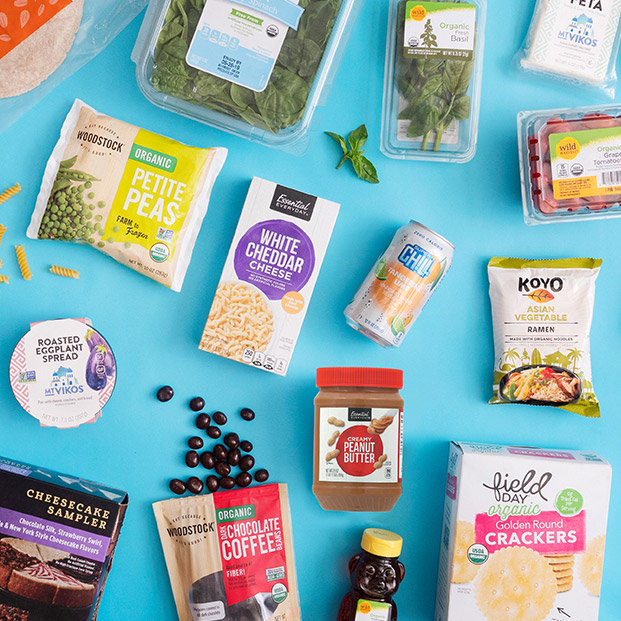
Brewer recommends simple meals and snacks. As a vegetarian, she prefers hummus, eggless egg salad and, the classic American lunch staple, peanut butter, which she calls ''the No. 1 lunch food.'' It has protein, good fats and never spoils. She also said that it's easy to stock your desk with foods such as Fantastic Foods soups, bean dip, crackers, dried fruit and seasonal fruits. Making extra food at dinner and taking leftovers to work also makes lunch decisions easier.

''You don't have to go to McDonald's,'' Brewer said. ''There are other options. They can be tasty and there's tons of variety.''